
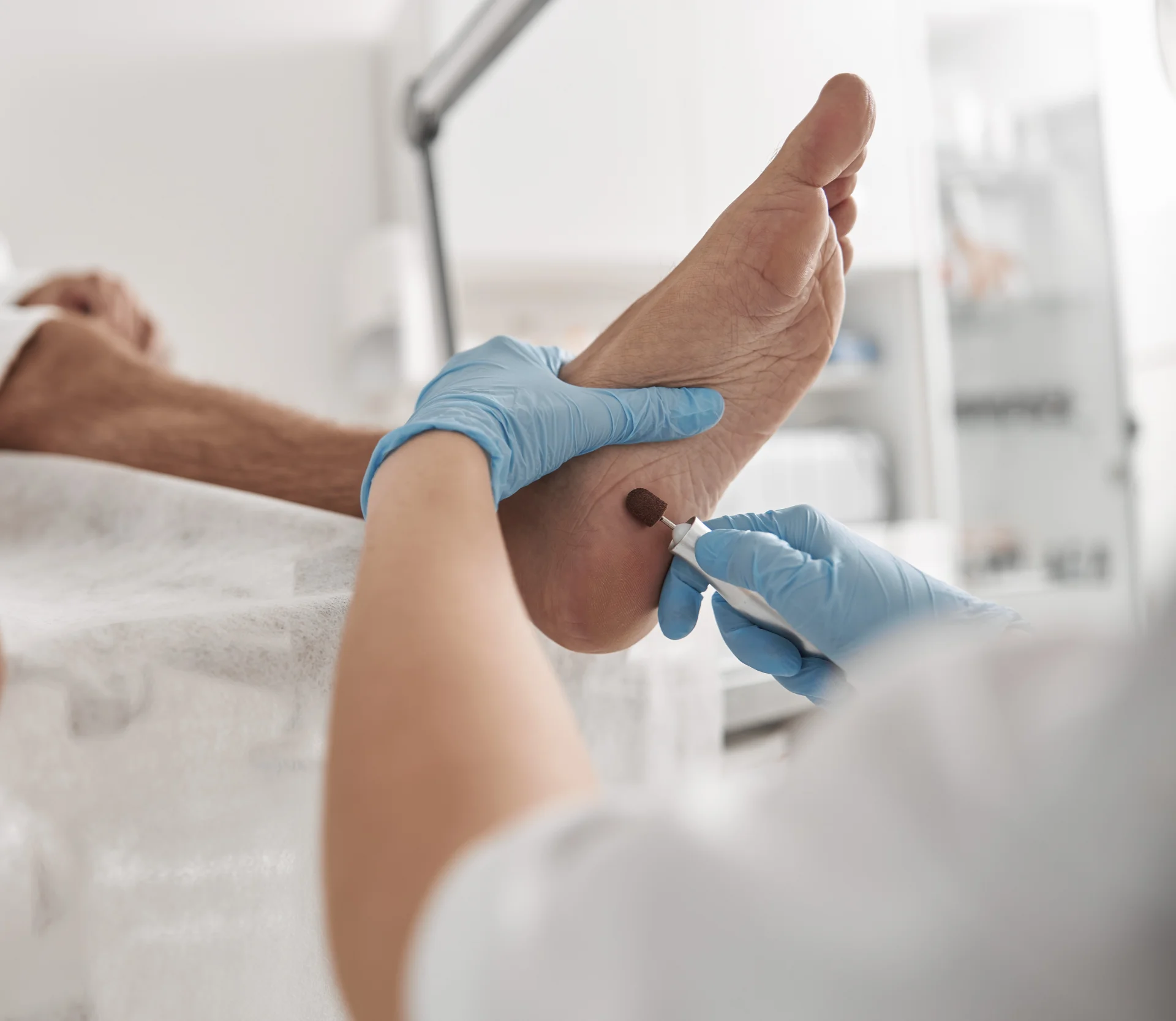
Corns & Calluses Treatment
Corns and calluses are areas of thickened skin that develop in response to repeated pressure or friction. They are very common on the feet and can range from a mild nuisance to something that becomes painful when walking or wearing shoes.
At Bucks Podiatry, we can safely reduce corns and calluses, identify why they are developing and advise on ways to reduce the pressure that is causing them.
What is the difference between a corn and a callus?
A callus is a broader area of thickened, hardened skin. It commonly develops under the ball of the foot, around the heel or over areas that experience repeated pressure.
A corn is usually smaller and more concentrated, with a firmer central core. Corns often develop over bony areas, between the toes or on the tops and sides of the toes.
Both are caused by pressure or friction, but corns tend to be more painful because the pressure is focused into a smaller area.
What causes corns and calluses?
Common causes include:
- Tight or poorly fitting footwear
- Repeated pressure from walking or standing
- Prominent joints or bony areas
- Toe deformities such as hammer toes
- Bunions
- Changes in foot shape or posture
- High-impact activity
- Areas of increased pressure under the foot
- Reduced natural cushioning beneath the foot
Sometimes corns and calluses keep returning because there is an underlying biomechanical or footwear-related reason for the pressure.
How are corns and calluses treated?
Treatment usually involves carefully removing the thickened skin using specialist podiatry instruments.
This is generally comfortable and many patients notice an immediate reduction in pressure once the hard skin has been removed.
Depending on the cause, treatment may also include:
- Padding or offloading
- Footwear advice
- Moisturising and skin-care advice
- Silicone devices for toe pressure
- Advice on reducing friction
- Biomechanical assessment if pressure is related to how you walk
- Orthotics where appropriate
Our aim is not just to remove the hard skin, but to understand why it is forming and reduce the chance of it returning as quickly.
Can I remove a corn myself?
It is best to avoid cutting corns or hard skin yourself with blades or sharp instruments.
This can cause skin damage, bleeding and infection.
Over-the-counter corn plasters containing acids are also not suitable for everyone and should be used with caution, particularly if you have diabetes, reduced circulation or reduced sensation in your feet.
A podiatrist can remove the corn safely and assess whether there is an underlying cause that needs addressing.
Why do my corns keep coming back?
If the same area continues to experience pressure or friction, the skin will often thicken again.
Recurring corns can be associated with footwear, foot shape, toe position or the way pressure is distributed when you walk.
If a corn keeps returning, your podiatrist may recommend a more detailed assessment to look at these contributing factors.
Are corns and calluses dangerous?
For most people they are not dangerous, but they can become increasingly uncomfortable and may occasionally lead to skin breakdown.
If you have diabetes, poor circulation, reduced sensation or another condition affecting your feet, it is particularly important to have corns and calluses managed professionally.
What is a soft corn?
Soft corns usually develop between the toes where the skin is exposed to both pressure and moisture.
They may feel tender and can sometimes be mistaken for other skin problems.
Treatment usually involves reducing the corn and looking at ways to relieve the pressure between the toes.
Frequently asked questions
Does corn removal hurt?
Usually not.
Removing thickened or dead skin is generally comfortable because the outer layers being treated do not contain the same sensation as healthy skin underneath.
If the area is already very inflamed or tender, your podiatrist will work carefully to keep treatment as comfortable as possible.
How often will I need treatment?
This depends on how quickly the hard skin returns and whether the underlying pressure can be reduced.
Some patients only need occasional treatment, while others benefit from regular routine podiatry appointments (link to Routine Podiatry and Chiropody page).
Can changing my shoes help?
Yes.
If your footwear is too narrow, tight or places pressure over a specific part of the foot, changing to a better-fitting shoe can make a significant difference.
Your podiatrist can advise on the type of footwear that may be most appropriate.
Can orthotics help with recurrent calluses?
In some cases, yes.
If calluses are forming because of the way pressure is distributed through the foot, orthotics may help reduce load in the affected area.
They are not necessary for everyone and would only be recommended following assessment.
Is a corn the same as a verruca?
No.
A corn is caused by repeated pressure or friction, while a verruca (link to Swift Verrucae Treatment page) is caused by a viral infection.
They can sometimes look similar, so if you are unsure, a podiatrist can assess the area and confirm the diagnosis.
Book treatment for corns and calluses
If corns or calluses are making walking uncomfortable, causing pressure in your shoes or repeatedly returning, we can assess the problem and provide appropriate treatment.
At Bucks Podiatry, we offer professional treatment for corns, calluses and other common foot problems.
Book a routine podiatry appointment online or contact our team to arrange an assessment.