
K-Laser
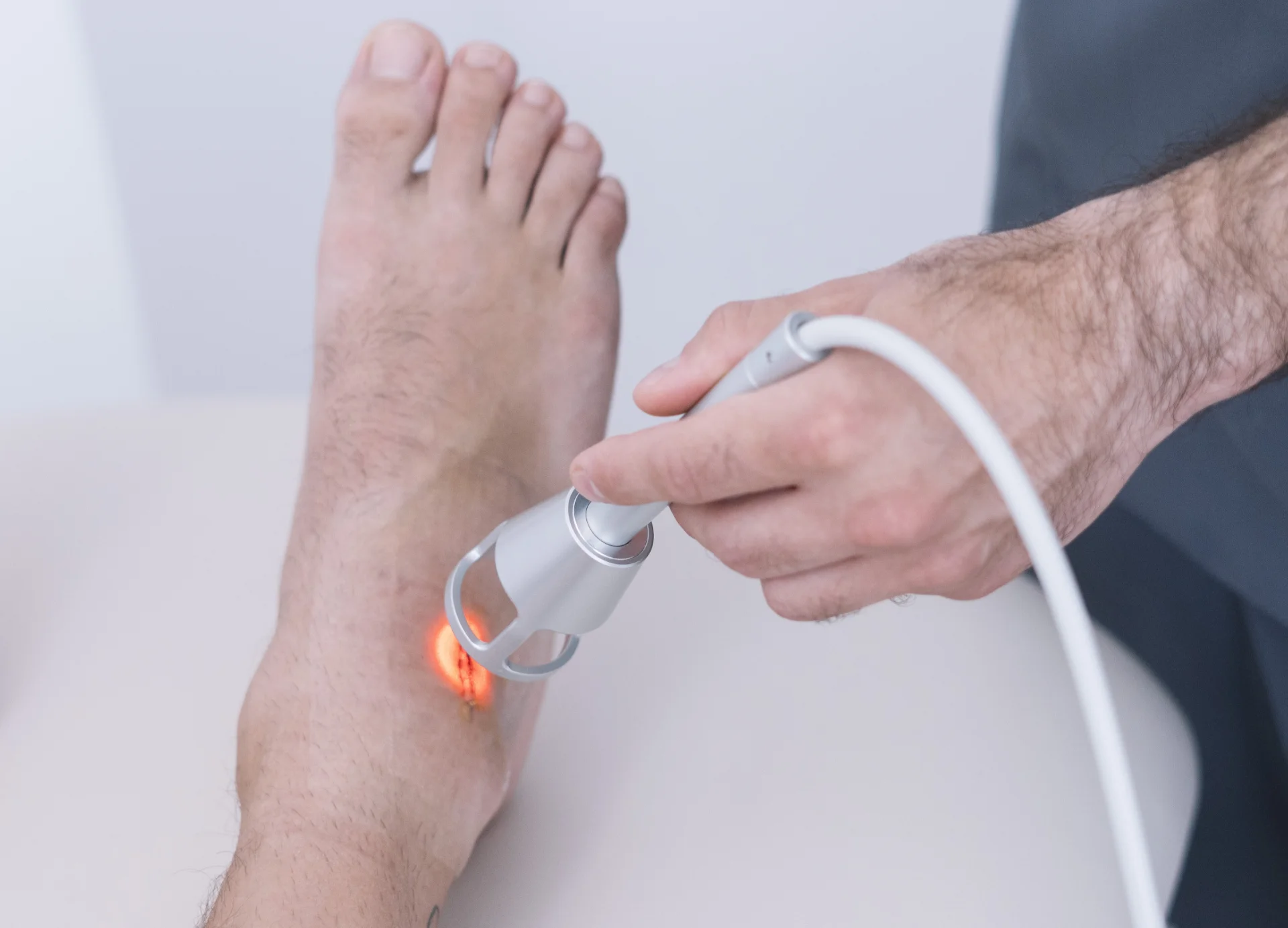
K-Laser therapy is a non-invasive treatment that uses specific wavelengths of light to stimulate activity within the tissues. It is designed to support the body’s natural healing processes and may help to reduce pain and inflammation while promoting tissue repair.
At Bucks Podiatry, we use K-Laser therapy as part of the treatment and rehabilitation of a range of foot and ankle problems. It can be used on its own in some cases, or alongside other podiatry treatments and rehabilitation programmes.
K-Laser treatment is available at our Amersham and Beaconsfield clinics.
How does K-Laser therapy work?
K-Laser delivers controlled laser energy into the tissues. This process, known as photobiomodulation, can influence cellular activity and local circulation.
The aim of treatment is to:
- Help reduce pain and inflammation
- Improve local blood flow and tissue oxygenation
- Support cellular repair and regeneration
- Encourage recovery following injury
- Help reduce swelling and oedema
- Support the healing of soft tissues and wounds
Your podiatrist will assess your condition before recommending laser therapy and will explain whether it is appropriate for you.
K-Laser for tissue and wound healing
Laser therapy can stimulate cellular processes involved in tissue repair and may help improve local circulation and oxygen delivery.
For certain wounds and soft-tissue injuries, this can make K-Laser a useful addition to an appropriate treatment programme. Treatment of wounds or ulcers will always follow a full assessment, and patients with diabetes, vascular problems or other medical conditions may require additional investigation or medical care.
K-Laser for swelling and inflammation
Injuries and inflammatory conditions can lead to local swelling around the foot and ankle.
K-Laser therapy may help to improve local circulation and lymphatic movement, supporting the reduction of swelling and congestion within the tissues.
What does K-Laser treatment feel like?
Treatment is generally comfortable and non-invasive. Most patients feel little more than a gentle warmth as the laser is moved over the treatment area.
There are no needles or injections involved and no anaesthetic is required.
Sessions are usually relatively short, although treatment time depends on the size of the area and the condition being treated.
Is there any downtime?
There is normally no downtime following K-Laser treatment, and most patients can continue with their usual daily activities afterwards.
Your podiatrist may occasionally recommend modifying certain activities as part of the wider management of your condition.
How many K-Laser sessions will I need?
The number of treatments varies depending on the problem being treated, how long you have had it and how your body responds.
Some acute conditions may require only a short course, while long-standing tendon, joint or soft-tissue problems may benefit from a longer treatment programme.
Following your assessment, your podiatrist will recommend a treatment plan appropriate for your individual condition.
What foot and ankle conditions can K-Laser help with?
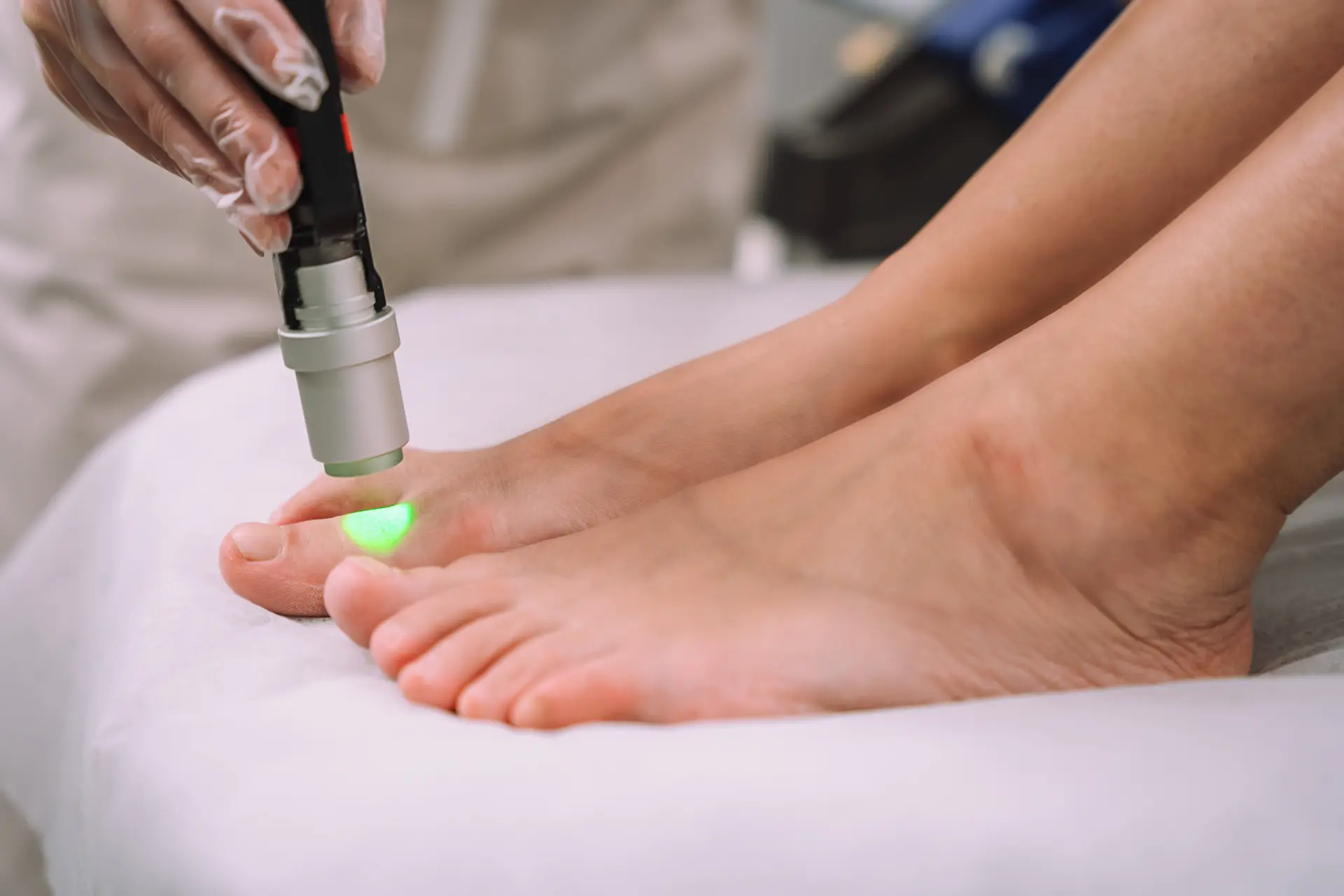
K-Laser therapy may be incorporated into treatment for a variety of conditions, including:
Plantar fasciitis and heel pain
Laser therapy may be used alongside stretching, strengthening, footwear advice and other treatments to help settle persistent plantar fascia pain.
Achilles and other tendinopathies
K-Laser can be used as part of a rehabilitation programme for painful or irritated tendons around the foot and ankle.
Muscle and ligament injuries
Laser treatment may help support recovery following foot and ankle sprains, strains and sporting injuries.
Arthritic joint pain
It may be used to help manage pain and inflammation associated with osteoarthritis and other painful foot and ankle joints.
Diabetic and peripheral neuropathic symptoms
In appropriate patients, laser therapy may form part of a wider management programme for certain neuropathic symptoms.
Wounds and foot ulcers
K-Laser may be used alongside appropriate medical and podiatric wound care to support tissue healing in selected patients.
Fungal nail infections
Laser treatment can sometimes be incorporated into the management of fungal toenail infections (link to Fungal Nails page), depending on the individual case.
Warts and verrucae
Laser therapy may also be considered as part of the management of persistent verrucae in selected patients.
Frequently asked questions
Is K-Laser painful?
No. K-Laser therapy is non-invasive and most patients find treatment comfortable. You may notice a gentle warming sensation during treatment.
How quickly will I notice a difference?
Response to treatment varies between individuals and conditions. Some patients notice changes in pain or movement relatively early in their treatment programme, while longer-standing conditions can take more time.
Can K-Laser be combined with other treatments?
Yes. Laser therapy is often used as part of a wider treatment programme and may be combined with exercises, rehabilitation, footwear advice, orthotics, shockwave therapy or other podiatry treatments where appropriate.
Is K-Laser suitable for everyone?
Not necessarily. Your podiatrist will ask about your medical history and assess the area before treatment to make sure laser therapy is appropriate and safe for you.
Book K-Laser therapy at Bucks Podiatry
K-Laser therapy is available at Bucks Podiatry in Amersham and Beaconsfield.
If you are struggling with persistent heel pain, a tendon problem, foot or ankle injury, or another ongoing podiatric condition, our podiatrists can assess the problem and advise whether K-Laser therapy could form part of your treatment.
Book online or contact our team to arrange an appointment.