
Fungal Nails
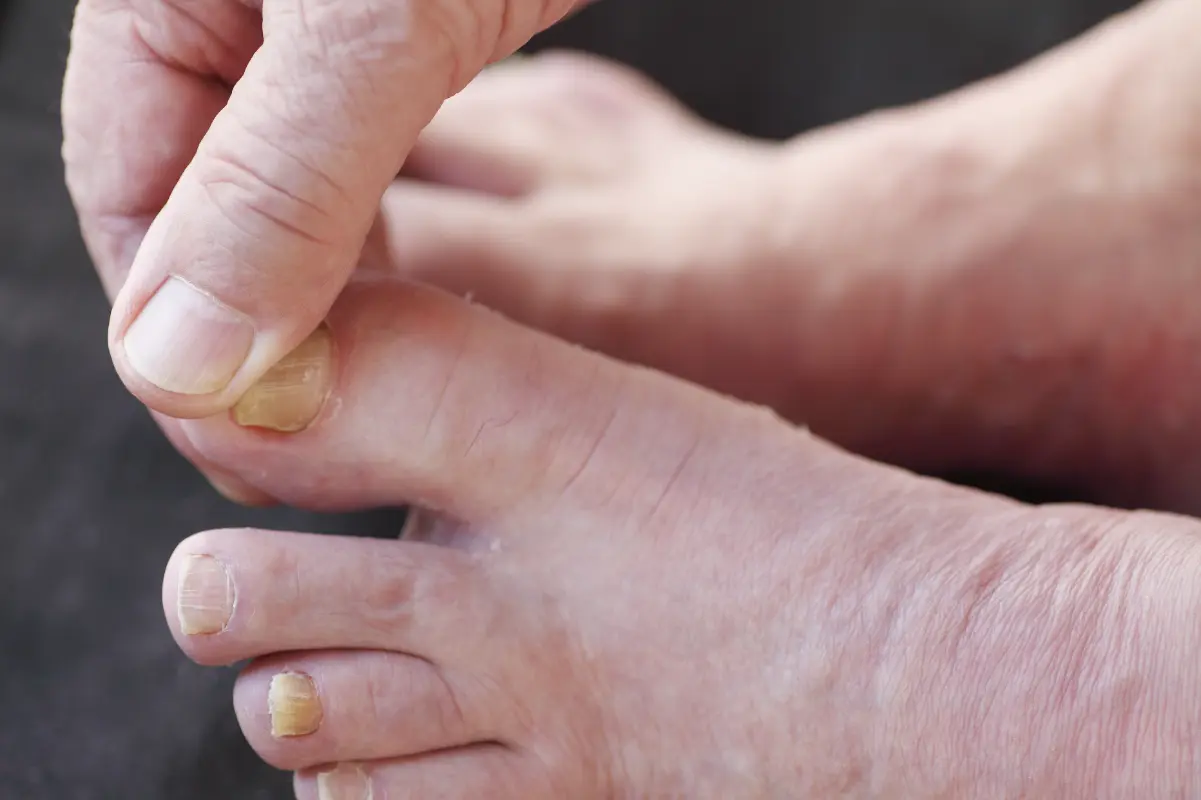
Fungal nail infections are common and can cause toenails to become thickened, discoloured, brittle or difficult to cut.
They can be persistent and are often difficult to treat successfully without the right diagnosis and management plan. At Bucks Podiatry, we assess the nail carefully, help determine whether a fungal infection is likely and recommend the most appropriate treatment.
What is a fungal nail infection?
A fungal nail infection, also known as onychomycosis, occurs when fungus infects the nail plate or the skin underneath the nail.
The infection may begin in one nail and gradually spread to others.
Common signs include:
- Yellow, white or brown discolouration
- Thickening of the nail
- Crumbling or splitting
- Distortion of the nail shape
- Debris underneath the nail
- Separation of the nail from the nail bed
- Difficulty cutting the nail
- Discomfort or pressure in footwear
Fungal nail infections are more common in the toenails than the fingernails.
Is every thickened or discoloured nail fungal?
No.
Trauma, pressure from footwear, psoriasis and other nail conditions can look very similar to a fungal infection.
That is why it is important to assess the nail properly rather than simply assuming fungus is the cause.
In some cases, your podiatrist may recommend testing before starting treatment, particularly if the diagnosis is uncertain or oral medication is being considered.
What causes fungal nails?
Fungi thrive in warm, moist environments and can enter the nail through small breaks in the skin or nail plate.
Risk factors include:
- Athlete’s foot
- Excessive sweating
- Regular use of communal changing rooms and showers
- Wearing enclosed footwear for long periods
- Nail trauma
- Increasing age
- Diabetes
- Reduced circulation
- A weakened immune system
Fungal infections can also spread from one nail to another.
How are fungal nails treated?
Treatment depends on how many nails are affected, how severe the infection is and your general health.
Your treatment plan may include:
- Professional reduction and thinning of the nail
- Removal of loose or damaged nail material
- Topical antifungal treatments
- Advice on treating associated athlete’s foot
- Footwear and hygiene advice
- K-Laser treatment where appropriate
- Referral to your GP for oral antifungal medication if indicated
Treatment is often most successful when several approaches are combined.
Professional nail reduction
Thickened fungal nails can become uncomfortable in shoes and difficult to cut safely.
Your podiatrist can carefully thin and reduce the nail, making it more comfortable and improving access for topical treatments.
Regular reduction may also help keep the nail more manageable while healthy nail grows through.
Topical antifungal treatment
Topical treatments are applied directly to the nail and can be useful for milder infections.
They need to be used consistently and usually for several months because toenails grow slowly.
Your podiatrist can advise which type of treatment may be most appropriate and how to apply it correctly.
K-Laser for fungal nails
At Bucks Podiatry, K-Laser therapy may be considered as part of the treatment plan for some fungal nail infections.
Laser energy is applied to the affected nail and surrounding tissue without cutting or damaging the nail.
It is a non-invasive treatment and may be used alongside nail reduction, topical antifungal treatment and advice on reducing reinfection.
As with all fungal nail treatments, results vary and several sessions may be required.
What about antifungal tablets?
Oral antifungal medication can be effective for some patients, particularly where the infection is extensive.
These medicines are prescribed by a GP and may not be suitable for everyone.
Your podiatrist can advise whether discussing oral treatment with your GP may be appropriate.
How long does fungal nail treatment take?
Fungal nail treatment requires patience because toenails grow slowly.
Even after the infection has been successfully treated, it can take many months for a healthy new nail to grow through fully.
The important sign of improvement is usually clear, healthy nail growing from the base rather than an immediate change in the whole nail.
Can fungal nails come back?
Yes.
Reinfection is possible, particularly if there is untreated athlete’s foot or fungus remaining in footwear.
To reduce the risk of recurrence, we may advise:
- Treating athlete’s foot at the same time
- Keeping feet clean and dry
- Changing socks regularly
- Allowing footwear to dry fully between uses
- Avoiding sharing nail clippers or footwear
- Wearing flip-flops in communal showers or changing rooms
- Cleaning or replacing contaminated footwear where appropriate
Is fungal nail contagious?
Fungal infections can spread between people and from one part of the foot to another.
They are commonly picked up in warm, damp communal areas such as swimming pools, gyms and changing rooms.
Good foot hygiene and treating athlete’s foot early can help reduce the risk.
Frequently asked questions
Will a fungal nail clear on its own?
It is unlikely once the fungus has become established within the nail.
Without treatment, the infection may remain stable or gradually spread to more of the nail or neighbouring nails.
Can I just cut the fungal part away?
Cutting or thinning the nail can make it more comfortable and improve the effectiveness of some treatments, but it does not usually eliminate the underlying fungal infection by itself.
Does K-Laser hurt?
K-Laser treatment is non-invasive and is generally well tolerated.
Most patients feel little more than a mild warming sensation during treatment.
How quickly will my nail look normal again?
Toenails grow slowly, so visible improvement takes time.
A healthy toenail may take many months to replace the damaged nail completely.
Should I treat athlete’s foot as well?
Yes.
Athlete’s foot and fungal nail infections are often linked, and untreated fungal skin infection can increase the risk of the nail becoming reinfected.
Do I need a GP referral?
No. You can book directly with Bucks Podiatry for assessment and treatment.
Book a fungal nail assessment
If your toenails have become thickened, discoloured, brittle or difficult to manage, we can assess whether a fungal infection is likely and discuss the treatment options available.
At Bucks Podiatry, we offer professional nail care and treatment plans tailored to the individual, including K-Laser therapy where appropriate.
Book a podiatry appointment online or contact our team to arrange an assessment.