
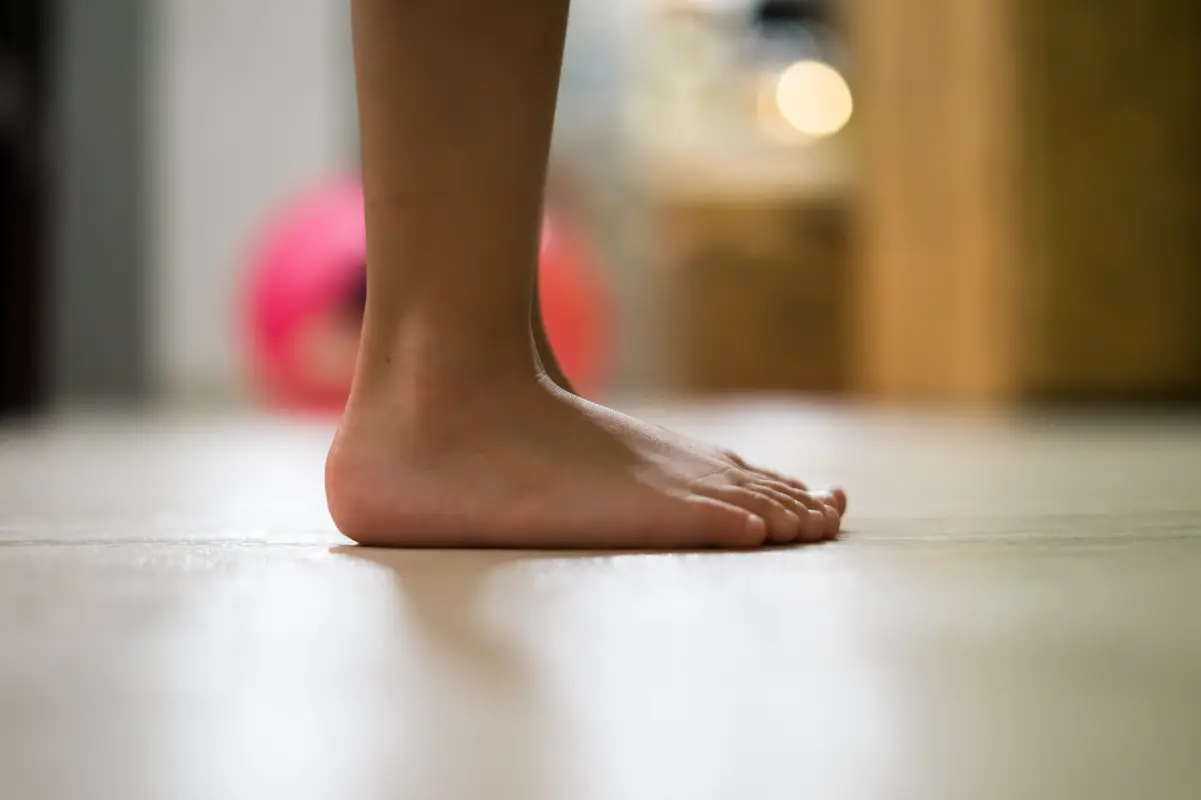
Flat Feet Treatment
Flat feet, sometimes called fallen arches, describes feet where the arch along the inside is low or appears to disappear when you stand. Many people with flat feet have no symptoms at all, but for some it can contribute to aching, tiredness and pain in the feet, ankles, knees or lower back.
At Bucks Podiatry, we assess how your feet work when you stand and walk, so we can tell whether your flat feet are likely to be causing a problem and, if so, what can help.
What are flat feet?
The arch of the foot helps to absorb shock and spread pressure as you walk. With flat feet, the arch is lower than average and the foot may roll inwards more than usual as you move.
There are two main types. Flexible flat feet are the most common: an arch is visible when you sit or stand on tiptoe, but it flattens when you put weight through the foot. Rigid flat feet are less common, with little or no arch in any position, and may be linked to stiffness in the joints of the foot.
What symptoms can flat feet cause?
Some people never notice any symptoms. Others may experience:
- Aching or tiredness in the arch or the foot after standing or walking
- Pain around the heel (link to Foot and Heel Pain page) or along the inside of the ankle
- Swelling along the inside of the ankle
- Shin, knee or lower back discomfort
- Feet that roll inwards when walking or running
- Shoes that wear down more quickly on the inside
What causes flat feet?
Common causes include:
- Inherited foot shape and naturally low arches
- Loose or flexible ligaments
- Gradual changes in the foot with age
- Weight gain or pregnancy
- Injury or problems with the tendons that support the arch
- Arthritis in the joints of the foot
- Some medical or neurological conditions
A sudden change in the shape of your arch, particularly if it is painful, should always be assessed.
How are flat feet treated?
Not everyone with flat feet needs treatment. If your feet are comfortable, you may simply need advice on keeping them healthy.
When flat feet are causing symptoms, we usually start with a biomechanical assessment to see how your feet and legs move. Treatment may then include:
- Footwear advice
- Stretching and strengthening exercises
- Supportive insoles or custom orthotics
- Treatment for related problems such as heel or arch pain
- Advice on managing activity levels
Our aim is to improve comfort and reduce strain on the feet, rather than to change the shape of your arch.
Frequently asked questions
Are flat feet a problem?
Not always. Many people have flat feet and never have any difficulty. Treatment is only needed when they are causing pain or affecting how you move.
Will I need orthotics?
Orthotics can help some people with painful flat feet, but they are not necessary for everyone. We will only recommend them following an assessment.
Can flat feet be corrected?
Treatment does not usually rebuild the arch, but it can reduce symptoms and make walking and exercise more comfortable.
Do children grow out of flat feet?
Many young children appear to have flat feet because their arches are still developing, and this often improves with age.
If your child complains of pain, trips often or avoids activity, it is worth having their feet checked.
When should I see a podiatrist?
If your feet ache regularly, you have pain around the heel or ankle, or you have noticed your arch changing, an assessment can help identify the cause.