
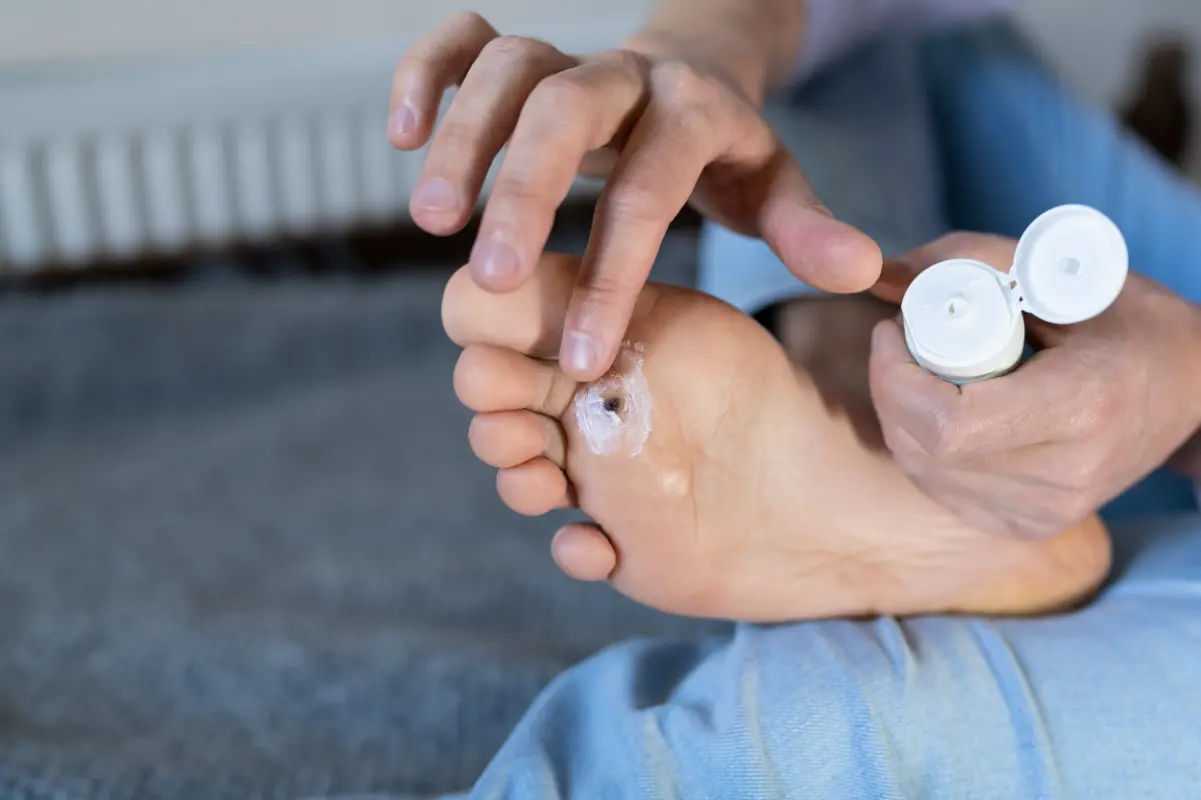
Verrucae & Warts Treatment
Verrucae and warts are common skin growths caused by the human papillomavirus (HPV). They can appear on the soles of the feet, the toes and sometimes the hands, and they affect both children and adults. Some clear up on their own, while others can last for months or even years.
At Bucks Podiatry, we can assess your verruca or wart, confirm what it is and talk you through the treatment options, including Swift microwave treatment where it is suitable.
What is the difference between a verruca and a wart?
They are caused by the same virus. A wart usually appears on the hands or other areas of skin, and a verruca is the name for a wart on the sole of the foot. Verrucae are pushed inwards by the pressure of walking, so they are often flat, can feel tender and may have small dark dots in the centre.
What causes verrucae?
The virus enters through tiny breaks in the skin, and it is more likely to be picked up in warm, damp places. Common routes include:
- Swimming pools and changing rooms
- Gyms and communal showers
- Walking barefoot in shared spaces
- Sharing towels or footwear with someone who has a verruca
Not everyone who comes into contact with the virus develops a verruca. How your immune system responds plays a large part.
Do verrucae need treatment?
Not always. Many clear up without treatment, but this can take a long time. You may want treatment if a verruca is painful, spreading, keeps coming back or makes walking uncomfortable.
How are verrucae and warts treated?
Your podiatrist will start by assessing the lesion to confirm it is a verruca and not another skin condition. They will then recommend an approach based on its size, location and how long it has been there. For stubborn or recurring verrucae, this may include Swift treatment (link to the Swift Verrucae Treatment page), which uses microwave energy to help stimulate the body’s own immune response. It involves no needles and no dressings.
Can I treat a verruca myself?
Over-the-counter treatments are available, but they are not suitable for everyone. Take particular care if you have diabetes, reduced circulation or reduced sensation in your feet. Avoid cutting or picking at a verruca, as this can cause bleeding, infection and spread the virus.
How can I stop verrucae spreading?
- Wear flip-flops or verruca socks in pools and communal changing areas.
- Keep your feet clean and dry.
- Do not share towels, socks or shoes.
- Avoid touching or picking the verruca, and wash your hands afterwards.
- Keep any verruca covered when you swim, in line with your pool’s rules.
Should I see a podiatrist?
Book an assessment if the verruca is painful, growing, spreading or multiplying, if it has not cleared after several months, or if you are not sure it is a verruca. It is also worth being seen if you have diabetes or poor circulation.
Frequently asked questions
Are verrucae contagious?
They can be, but the virus is not very easily passed on. Reasonable precautions in communal areas are usually enough.
Can children be treated?
Yes. Suitability depends on the child and where the verruca is. Your podiatrist will assess it first and explain the options.
Does treatment hurt?
This depends on the treatment used and the person. Your podiatrist will explain what to expect beforehand and work to keep you comfortable.
How many appointments will I need?
Persistent verrucae often need a course of treatment rather than a single visit. Your podiatrist will recommend a plan after assessing it.
Do I need a referral?
No. You can book directly with Bucks Podiatry.
Which clinic should I book?
We offer verruca assessments at Amersham, Beaconsfield and Gerrards Cross. Choose whichever is most convenient.